

Half a moon

Half a moon…
How many stars is that worth?
Is it a calculation of the light gained vs the light displaced?
Half a life…
How much of being is that worth?
Is it a calculation of the years departed vs the years that may yet come?
Half a love…
How much of heart is that worth?
Is it a calculation of the love that has been gained vs the love that may never be felt?
Half a victory…
How many lives was that worth?
Is it a calculation of territory conquered
vs the loss of light, of being, of love?
How do we even make these calculations?
How can we weigh the bird in hand against the magnificence of flight?
One street in Silwan

We had a screening tonight of the film “One Street in Silwan”, (IMDB) which was made by Bissan Tibi, a young aspiring filmmaker who grew up here in the village. This was her first film, after studying cinema at Tel Aviv U.
One Street in Silwan tells the story of “Batan al-Hawa” Street (East Jerusalem), which overlooks the Temple Mount [Haram al-Sharif] and serves as a microcosm of the Israeli-Palestinian conflict. On one side of the street, live Israeli settlers in a house once belonging to an evicted Palestinian family. On the other side, a Palestinian family faces eviction, alongside 750 of the neighborhood’s residents, with the purpose of establishing more settlements. Told in segments through the perspectives of children and residents, the film sheds light on the chaotic realities of life on the street.
(blurb from Solidarity Film Festival Tel Aviv
Bissan finished filming in September 2023 but has remained in contact with the families. Those she spoke with today had just received their final eviction notices and must vacate their homes within 21 days.
Fifteen families were already evicted in March – more will shortly follow. According to Bissan, this has been the largest mass eviction of Palestinians from Silwan since 1967. Although the legal fights against eviction have in some cases lasted decades, following the events of October 2023, the cases suddenly moved through the courts and eviction notices were served a lot faster.
Bissan says the best way to help these families facing eviction is by supporting the organization Ir Amim.
Reports on the evictions
Text:
https://peacenow.org.il/en/eviction-batan-al-hawa-250326
Video:
https://www.youtube.com/watch?v=pVLNfKrQMWs
The I witness Sliwan project (thanks to @lotfi)
What went wrong with Israel?
I read in the Guardian that the Israeli-US genocide scholar Omer Bartov has a new book out, What Went Wrong with Israel.
From the review, it looks like Mishra covered some of the same ground in his book “The World After Gaza”. Bartov sees Zionism as having been a liberation movement for the persecuted Jews of Europe, but opposes the kind of Zionism he sees in Israel today. At the same time, he refuses to call himself an “anti-Zionist” and says that he doesn’t know what that term even means.
I would define myself as anti-Zionist simply because I am anti-ehno-nationalist. It isn’t possible to be one without the other. By anti-ethno-nationalist, I mean that I don’t think there is a place in the modern world for nations built around particular ethnicities. To the extent that they are so (i.e. that’s the character that they have inherited) I think they need to accept and embrace the fact that they are transitioning towards being multi-ethnic, multi-religious secular states, because in all the nations that I know that is the reality.
The principle of separation between church and state needs to be strengthened and extended. Everyone’s individual and group rights should be protected, so long as they do not break the social contract that exists between state and citizen, for the purpose of protecting all citizens. In other words, setting up a national framework for Jews, Basques, Inuit, Kurds, etc is not the preferable solution, because there will always be some of these left outside the “mother country” and their individual, and, if relevant, group rights need to be protected too.
Of course, it’s not always so simple. Sometimes there are things that need to be worked out, such as cases in which rules around marriage and divorce of a particular community contravene rules that have been enacted for the nation. Some of these communitarian rules limit the rights that have been established to protect all citizens. But there are solutions; such as by invoking the right to remove oneself from the rules set by the group and invoke the protection of national laws.
The world actually has some good frameworks upon which to base national laws, such as the Universal Declaration of Human Rights. Even if these frameworks unfortunately lack legal force, nations can choose to voluntarily abide by these, and align their own laws to accord with them.
At the time of its creation, and even today, some countries hark back to the outdated paradigm of the ethno-nationalist state, so it is difficult to criticize the birth of Israel on those grounds. What needs to be criticized is the manner in which territory that was already settled by an indigenous population was usurped for the purpose of creating an ethno-nationalist state that treated those that remained after expelling the majority, as second-class citizens. It solved the problem of traditional persecution of Jews by creating a new one, the disenfranchisement of Palestinians everywhere. The proper solution to anti-semitism, as to all other issues involving discrimination against minorities, should have been to protect the status of Jews within all the countries where they reside.
One does not need to be an anarchist to reject the principle of ethno-nationalist states like Israel, and one does not need to look for drastic geo-political solutions to the issue. All that needs to happen is for nations to change their internal policies to become more inclusive. Israel, like other countries, needs political reform. It needs to become a state for all of its citizens, in which individual and group rights are respected. This is still possible. It just needs to reach internal agreement that this is the desired solution. If the nations of the world had greater internal clarity regarding their own status as multi-ethnic states, and would use their influence to pressure their neighbours to adopt similar policies, Israel would be more likely to apply.
One of the principle sticking points is the acceptance of exceptionalism, and the time has come to reject this. Israel sees its position as exceptional because it was founded on the principle of becoming a refuge for Jews faced with anti-semitism. There needs to be zero tolerance everywhere for anti-semitism, as well as to other forms of xenophobia, and this needs to happen also in Israel itself.
Israel also sees itself as exceptional due to real or perceived threats to itself from Palestinians. But at the same time it does nothing to appease the group aspirations of Palestinians while doing everything to perpetuate the conflict, including continuing to expropriate land from Palestinians in the area that, by agreement, has been set aside for them to create a country of their own.
In an ideal situation, neither Israel nor Palestinians would need separate national homes, because the rights of both peoples would be respected in the same territory. But Israel cannot have it both ways. It either needs to cede territory beyond the 1949 armistice line, which it has stolen for Jewish settlers, for the Palestinians to establish their own state, or it needs to accept Palestinian citizens within these occupied territories as full citizens, because obviously they are not going anywhere.
Dust

Once, when escorting a group of Japanese visitors around the village, one of them asked me how it was that all our cars are so dirty. I remember my Dad, on his only visit, asking the same question.
Of course, the answer is that the Middle East is a very dusty place, with all that sand blowing up from the Sahara and Arabia. Sometimes the air is thick with it, especially during a khamsin, a weather phenomenon that occurs quite often during the months of Spring and Autumn.
Dust gets into our lungs and into our houses, and the only people I know who actually like the stuff are A (my daughter’s partner) and A, who lives in the village, both environmental scientists. And that’s because they have made an important discovery: terrestrial plants are able use this dust by absorbing nutrients like minerals through their leaves, rather than through their roots.
From The New Phytologist:
Atmospheric dust is a global nutrient source for plants via foliar uptake
Atmospheric mineral dust is a critical nutrient supplier to marine ecosystems, but its role in terrestrial plant nutrition remains underexplored due to the assumption that nutrients are acquired solely from soils via roots.
Here, we demonstrate that plants directly acquire nutrients from dust through leaves, revealing an unrecognized terrestrial uptake pathway. In a Mediterranean field study simulating dust events, dust application markedly increased plant macro and micronutrient concentrations, facilitated by the mildly acidic, organic-acid-rich leaf microenvironment that enhances dust dissolution and nutrient release.
Jordan via Google Maps
I was in Al-Jisah, Jordan at around 3 AM last night and it wasn’t a dream.
I had checked the weather app on my phone, and that’s where my location was set. Google Maps confirmed it.
I reckon the Israelis were checking their GPS obfuscating mechanisms ahead of another round with Iran, which, who knows, could start as early as tomorrow.
I hope not, but with Trump mouthing off on the media, Iran intransigent as ever, and the Israelis spoiling for a fight, I’m not so optimistic.
Ubuntu on my laptop | Right-wing politics

I chose Ubuntu for my laptop, mainly because, as I had read, Ubuntu seems to support this particular model (a Lenovo Ideapad Duet 5) better than others. This computer is actually more of a tablet than a laptop, and it is important for the OS to know Like when to switch the screen between landscape or portrait mode.
So I’ve had the time to compare the MX Linux that I have on my other computer to Ubuntu. I’m surprised when Ubuntu, which has a company behind it and probably paid full-time developers, has a few serious bugs to fix. For example, I switched to Thunar as a file manager, because Nautilus didn’t natively support thumbnails for its files. And I just had to go into the power settings to turn off “automatic brightness”, as the screen brightness was jumping up and down like crazy. Some applications, like Vivaldi browser, don’t seem to produce proper icons but only show the default gear system. There have been quite a number of minor annoyances like this, which in every case I’ve been able to fix, but these would be discouraging to newcomers. But then, every operating system has its strengths and weaknesses. MX requires me to download files in order to set up my printer – scanner, whereas Ubuntu recognized it immediately.
Right-wing politics
There was a “long read” article in the Guardian today about how the current rise in right wing ideologies resembles and differs from 20th century Nazism. I found myself falling asleep by the end of it (which does not necessarily reflect badly on the article; most likely it was the time of day). The nuggets that I did absorb from it are probably already obvious to anybody who understands these matters, but here they are:
He says at the beginning that politics is always about emotion, meaning that, both right wing or left wing leaders depends upon emotion to motivate adherants and win. Second, far right ideologies tend to motivate people by invoking emotions like belief that a particular group is responsible for many societal ills (scapegoatism + a misplaced desire for revenge – often towards the wrong people): we should crack down on minorities or immigrants who are abusing the system, taking our jobs, etc. Third, far right governments rarely deliver on their extravagant promises and ultimately either disappoint their electorate or manage to continue only by doubling down on their virulent rhetoric or chipping away at obstacles to their power which are intended to protect democracy from people like them.
Whether a politician or ideology is on the right or the left, I personally would not want to be caught up in the motivation to punish a certain group, even if it is, say, the elites who are amassing more and more capital, principally because the desire for revenge is a very destructive emotion – it eats away at our mental equilibrium and poisons hearts and minds. Nothing is worth that to me. But anyway I can’t vote in any national election anywhere, so it doesn’t matter.
Advantage for pronunciation of alternative alphabets
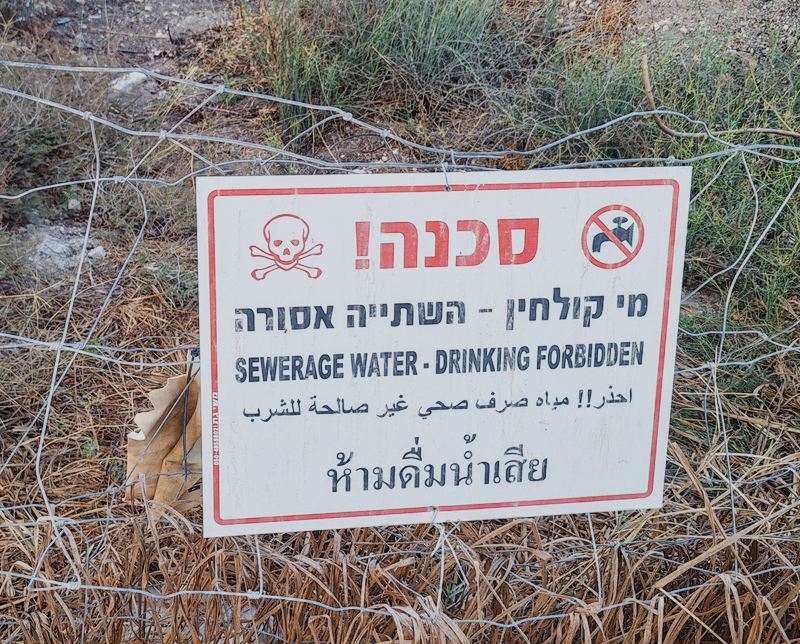
Sometimes knowing another alphabet can be helpful in pronouncing names that are usually pronounced wrong due to their spelling in Latin alphabets.
I have been thinking about how most English speakers mispronounce two Turkish names; first the country name, which is now officially Türkiye. Israelis get this right, or at least closer to the proper pronunciation, because it is written in Hebrew as טוּרְקִיָה.
To learn how to pronounce it properly, see
https://forvo.com/word/turkiye/
Second the name of its leader, which is written in Turkish as Erdoğan. This leads to English speakers pronouncing it in a way that would be unrecognizable to Turks. In Hebrew, this is written as ארדואן which is much closer to the proper pronunciation, to be found at:
https://forvo.com/word/recep_tayyip_erdo%C4%9Fan/
In the latter case, unfortunately, Israelis usually place the accent on the second syllable, which is usually the case with two syllable words in Hebrew.
Orde Wingate
We started to watch Palestine 36, the movie – we are kind of seeing it in late night installments. After watching tonight’s bit I looked up Orde Wingate, who features so prominently in the movie. I knew the name from an Israeli sports institute.
Wikipedia has a long article about him; one of the great crackpot military figures of the 20th century. He would not be out of place in Apocalypse Now. A sadistic war criminal with his own peculiar moral principles, a Christian Zionist with a grudge against Arabs. He helped to train Israel’s pre-state militias in his cruel and unconventional methods. People like Moshe Dayan said they “owed everything to him” so if you don’t like the IDF, look to Wingate.
Eventually the British decided he’d gotten in too deep and removed him from Palestine. But they sent him on to commands in Sudan, Ethiopia, Burma, where he won further distinctions but needed to be kept on a leash… He may have been insane, but was too useful to throw away. Eventually he died in a plane crash. Field Marshall Montgommery said it was the best thing that ever happened to him.
Finding root causes
A world where a country can bomb and kill 300 citizens of a neighbouring country, without warning, without any real clear morally acceptable reason, and with total impunity, is obviously sick. It is even gravely ill.
If this were a sickness of the body or the mind, we would try to determine its origin, in order to treat it, because if left to run its course, the sickness may continue to spread. We need to get to root causes.
That’s what I try to do in my thinking, in my meditation. But often I end up just shrugging it off. Surely, if the disease is so endemic, I have been affected by it too, and the disease must be clouding my judgement. And even if I do succeed in properly identifying the root cause, why should anyone accept my conclusions? Who am I? A nobody.
Nevertheless, I would say that if all of us would try to seek out the root causes of this sickness – in the world and maybe in ourselves – this could be a direction that would lead to healing.
For me, it is is a question of perception: I think the sickness is to be found in our way of perceiving ourselves and others, and the way we perceive ourselves in relation to the world and to the other.
Maybe you will reach an entirely different conclusion. But unless we attempt to figure this out, we will never be able to create a better world, a healthier place for our children. A place where death cannot suddenly rain down from the sky for no satisfactory reason.
A great deal depends on our understanding.